

For the start of Holy Week, today we will be doing a slow reading of Jesus’ journey to the cross in John 18 and 19. We begin with Jesus being arrested and conclude with Jesus hanging on the cross. We will alternate between reading scripture and short prayers as we reflect on the final moments before Jesus’ death.
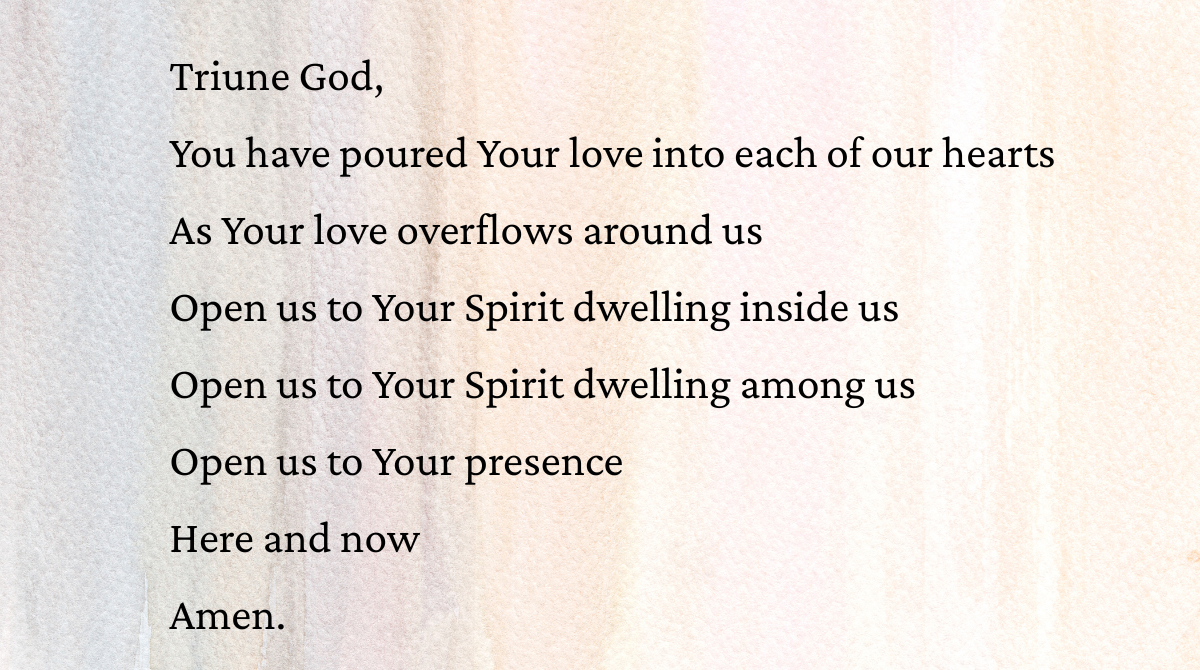
Light a candle, take some deep breaths, or sing a song, to draw your attention to God’s presence. Say this prayer together or read it to yourself.
Share with one another:
What is something that you are carrying with you into Holy Week?
Share in a reflective, prayerful time of reading John 18 – 19.
As we enter Holy Week we will spend time reading, listening, and reflecting on the story of Jesus’ journey from the garden to the cross.
This PDF has selected scripture and prayers for you to read aloud together.
Below are some music recommendations which you can use to aid your reflection time. You can listen to a song or sing them together before, during, or after the readings.
As time permits discuss some or all the following questions:
Select a song, or two, to help with your reflection.
Traditional Hymns:
Contemporary Music:
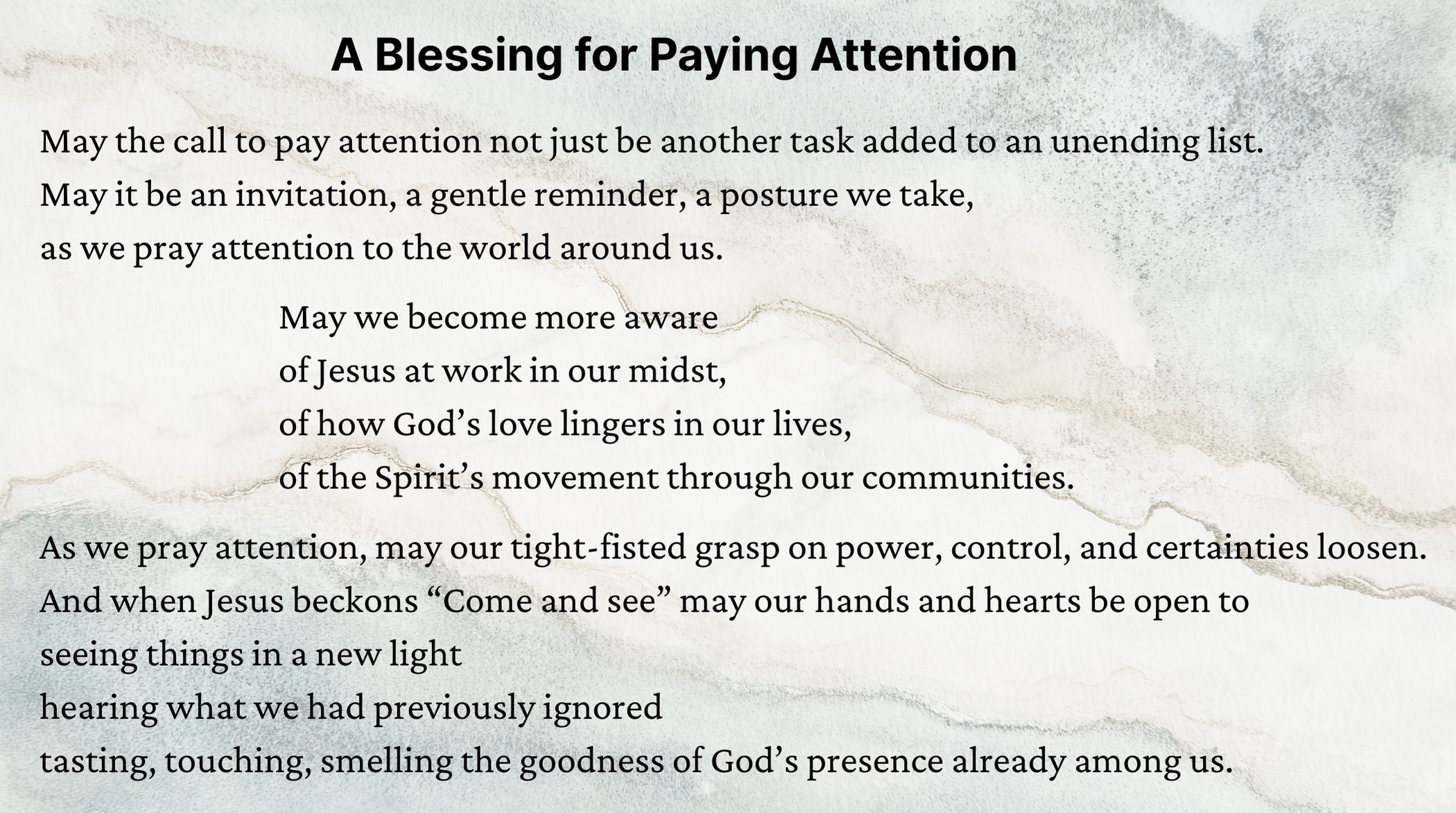
Close this time of worship by reading this blessing (written by Andrea Perrett).

Lesson Highlights: The last days of Jesus’ life are diffi cult, so this story is meant to help tell the story in an age-accessible way, focusing on the plot, but not the overt violence, of Jesus’ experience. This time, there’s no ‘play’ response, just given the content.
Leader Reads:
Jesus and his disciples had just finished their Passover dinner, which was sure to be a holiday meal to remember, given what Jesus had done and said. But if anyone was thinking they’d sit back, rest and let the evening pass by, they were clearly not paying attention. Things were tense, like a bow pulled back, an arrow ready to fly.
The group sang a psalm together, and got up, one by one, to follow Jesus to the Gethsemane garden, where he wanted to spend time praying.
That’s where they found him, the angry crowd carrying torches and weapons, armed like they were coming for a seriously dangerous person. But Jesus made a choice about how to react; he chose not to fight back. In fact, Peter tried–grabbed a sword, took a swipe at a guy’s ear. Malchus was his name, he was a slave of the high priest’s; he likely had no choice about coming that night. Jesus wasn’t having any of it. His last miracle before he died was to heal his ear.
Then they arrested him.
And all of Jesus’ disciples ran for their lives. Away from that place. Away from Jesus.
You may know that after someone’s arrested they often have a trial. This was true then as well, and Jesus appeared before both government and religious leaders, who questioned him, challenged him, accused him.
“You’re a threat to the empire–you don’t honor Caesar and claim to be leading a different kingdom!”
“You’re a threat to our safety-Rome will come for all of us because of you!”
“You’re a threat to our faith–you act like you’ve got God’s authority in you, and that’s for only God alone!”
“You’re a threat! A threat! A threat!”
And so Jesus had to go, they claimed. And it had to happen in a way that made it clear that no one else should dare threaten them like he had.
So Jesus was brought to a hill outside of town and killed the way criminals were–on a cross. There was a sign above his head that said, “King of the Jews”.
Throughout this whole, horrible day, Jesus’ followers tried to both lay low and stay near. What was happening to Jesus? What if they came for them too? Like Peter, hovering outside the house where Jesus’ trial was held. He was spotted and a man said, “Weren’t you with him, too?” “Oh, no. No, I wasn’t. You must be confused.”
Another person recognized him, “Hey, you were part of Jesus’ followers!” “I wasn’t. You are mistaken.”
A third person later on said, “I’m sure you were with Jesus.” “No! Stop saying that. I don’t even know the man!”
And after Peter had said for the third time that he was not with Jesus, an ordinary, horrible thing happened. It was nearly morning, so a rooster crowed. Ordinary. But Jesus had said, just a half day earlier, on the heels of Peter’s own promises of everlasting loyalty, “You’ll betray me, Peter, not just once, but three times, and not just someday, but today, before the rooster crows for morning.”
Peter had sworn that was impossible. And yet here he was, alone, afraid, ashamed, and so, so sad. His friend, his teacher, his leader was going to die, and he hadn’t been able to be there for him at all.
But even though we’ll stop the story here, it isn’t the end of the story. Jesus, after all, kept promising life. Life. Life. Life. So if everything is dead, clearly we aren’t done yet.
Key Question: As you think about today’s story, what did you notice about who God is or what God is like?
I imagine that Peter felt like he did not act like himself on this night. He didn’t do what he thought he would do. It was the opposite. Have you ever felt that way about something–like you know you are kind, but you acted mean? Or you know you are a good friend, but you didn’t listen to a friend’s ideas? Or you know you’re helpful, but you were asked to help that one time and got whiny? I think we all have those times.
There’s a practice called ‘confession’, which is just being honest with God. We simply tell God what we did that we know wasn’t good. We’re honest because it helps us know how much God still loves and likes us, and that our mistakes are not the end of the story.
We’ll have 20 quiet seconds just to tell God the truth about any time recently when you know you missed on what was best. Then I’ll close.
When it’s time say: “Nothing at all can ever separate you from the love of God. You never need to hide what you did wrong. You are always loved.”

