Ephesians 4:1-16
In our series, Feeding God’s Sheep, we have been looking at Scripture to answer the questions “Who are God’s sheep?” and “How do we feed them?” Today, for our final Small Church of the series, we will consider the times when we are the ones who are are sheep and explore what it looks like when we are cared for by others.
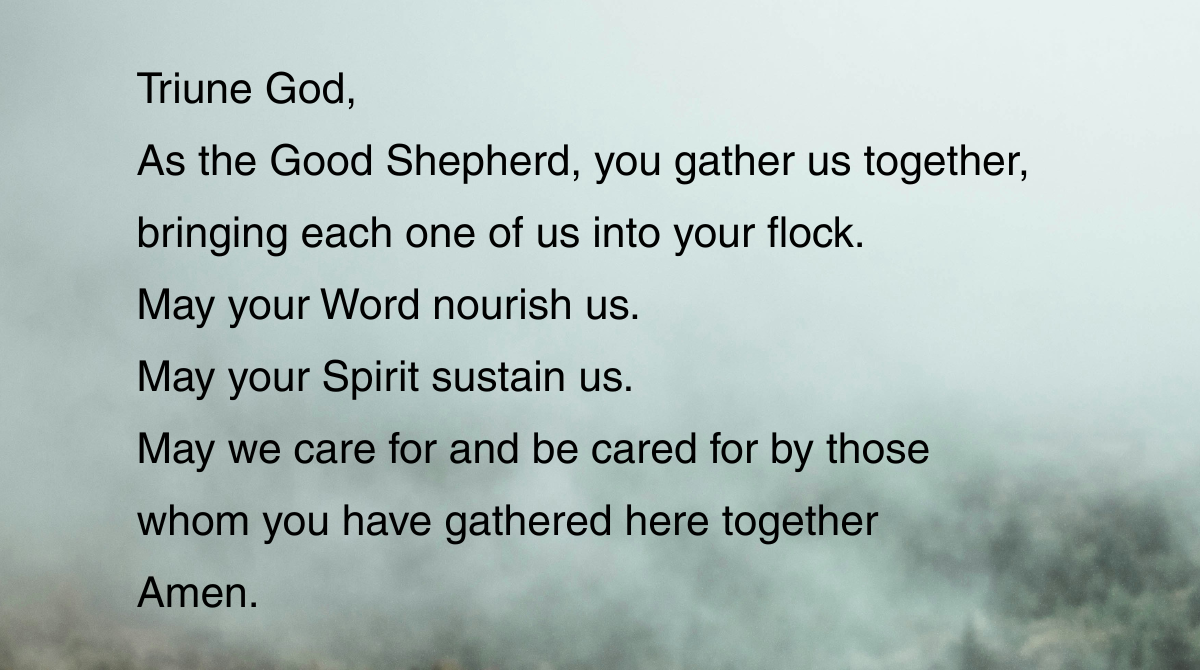
Light a candle, take some deep breaths, or sing a song, to draw your attention to God’s presence. Say this prayer together or read it to yourself.
Share with one another:
With summer around the corner, which parts of life speed up for you? Which parts slow down?
As a group, read Ephesians 4: 1-16 together.
When you read the Ephesian’s passage alongside the post from JS Park, what is your reaction? What resonates or challenges you?
In Ephesians we see that we are all given different gifts from God, and that the body needs all types of gifts. However, it can be difficult when our gifts don’t align with what society defines as productive or useful. If appropriate, share about a time when your gift was to simply be you; when being you was your contribution to the body of Christ.
Feeding God’s sheep isn’t always about going out and caring for others. Sometimes it is about caring for one another, or receiving care from others. Share about a time when you have been a sheep (fed and cared for by others). Did this experience change how you then care for others?
As time permits, listen to the following song, or share this prayer.
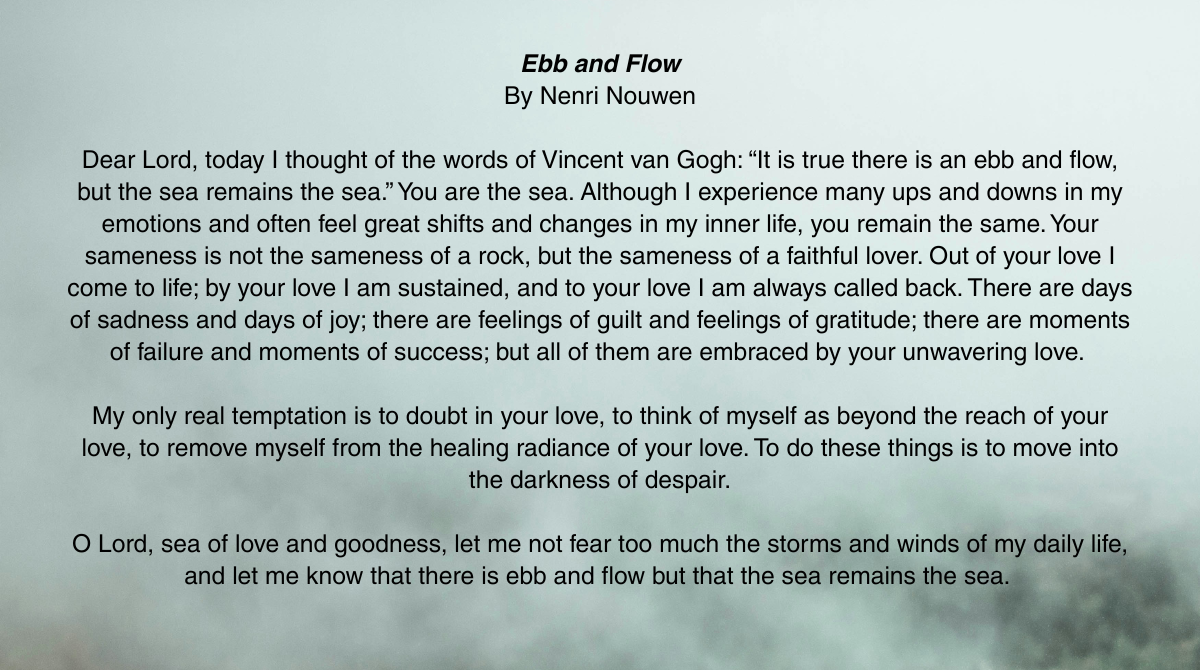
Close this time of worship by reading this prayer (written by Andrea Perrett).

Info for Leader: Last week in CapKids, we explored the Parable of the Vineyard Owner, and I wanted to continue the conversation in our small churches this week.
This is an excerpt from God’s Stories as Told by God’s Children, which we shared this past Sunday with the kids:
“Rules, rules, rules. Rules are everywhere. Some rules are good because they keep us safe. What are some good rules that keep us safe? ‘Don’t talk to strangers,’ or ‘Don’t touch a hot stove.’ But sometimes rules can be used as an excuse not to do what is just, especially when we’re talking about things that are hard to understand, like what justice is, what God is like, or how we should treat others.
If all we do is follow rules—this is called legalism—we might miss why the rules exist in the first place. So Jesus, who was a brilliant teacher, taught the reasons behind rules through parables. A parable is a made-up story that helps people better understand a difficult truth about how to live. These stories were designed to teach what justice is, who God is, and how we are to treat one another.
When Jesus told the story of the vineyard owner, he showed his listeners that the rule to pay workers their wages is about more than simply time equals money—it is about ensuring that everyone has enough to live. The story reminds us that employers have a responsibility toward the well-being of their workers.
God’s kin-dom is not like the kingdoms that ruled the lands where Jesus and his friends lived. Unlike the empires of that time, Jesus spoke about a society where everyone is treated justly. The moral of this story was true then, and it remains true today.”
We then focused on the difference between fairness and justice. In God’s economy, justice means ensuring that everyone has enough to live and flourish. Sometimes, what is just may not always appear fair when viewed through the lens of equal distribution or reward.
This Sunday, I would like to continue the conversation by exploring how this parable might speak to people whose circumstances make participation in traditional forms of work more difficult. Imagine hearing this story as a person living with a disability, as an elderly person, or as a child. What might this parable reveal about God’s concern for those whose needs remain the same, even when their ability to earn an income or contribute in socially recognized ways is limited?
This also provides an opportunity to reflect on disability and the image of God. As Christians, we believe that every person bears God’s image and possesses inherent dignity and worth. Rather than seeing disability as something that diminishes a person’s value, we can ask how people with different abilities reveal God’s character, enrich our communities, and teach us new ways of understanding dependence, belonging, resilience, and love.
How do we, as followers of Jesus teachings, learn to notice those who may sometimes be overlooked? How might we recognize and celebrate the many ways people embody Christ in our world?
I am not an expert in this area, but I believe these are important conversations for us to explore together. To support our discussion, I have put together a list of children’s books that feature characters living with disabilities, as well as a book recommendation for parents who would like to learn more.
Use yarn in a circle.
Each child says one thing that helps people feel included, then tosses the yarn.
A web forms.
This helps us recognize belonging is something we build together.
Intro for All Ages: (Summary of above): You could read the Parable again – Matthew 20: 1-16
This Sunday, we’re going to keep talking about the story of the vineyard owner. We’ll think about what this story might mean for people who cannot work in the same ways as others, such as some people with disabilities, older adults, or children.
What do you think this story tells us about God?
Does God care only about people who can work the most, or does God care about everyone?
In this story, Jesus shows us that God wants everyone to have what they need.
We’ll also talk about how every person is made in God’s image. That means every person is important, loved, and valuable. People have different gifts, strengths, and abilities, and those differences help make our communities special and stronger. We can learn a lot from one another about friendship, courage, kindness, and love.
Written from the perspective of a sibling whose brother is living with a disability. This book takes the reader through a day in their life allowing further understanding of similarities and differences that are experienced by those with disabilities.
This is a great option to explore diversity in our church community and the diversity of God’s creation. This book also fits well into our pride month conversations.
Label four corners of the room:
Read scenarios and have children and adults move to the corner that best matches their answer.
Examples:

Materials:
Around the edge, children write ways they or others can reflect God’s image, including those who may experience disabilities.
Examples:
Discuss how God’s image is reflected in many different people and many different abilities.
Avoid focusing on appearance and instead focus on character traits.
Further discussion could be: how would someone who isn’t verbal show love or bravery? How would someone who is in a wheelchair express creativity or be helpful?